NEW
The Science Behind Humidity Control in Fresh Food Display
Maintaining precise humidity levels between 85-95% RH in refrigerated displays isn't just about food preservation—it's a calculated balance between moisture retention and microbial control. When humidity drops below 80%, fresh produce can lose 3-5% of its weight daily through dehydration, while excessive humidity above 95% creates condensation that accelerates spoilage. This delicate equilibrium directly impacts:
- Weight loss reduction (up to 30% less shrinkage)
- Visual appeal preservation (color retention 2-3x longer)
- Microbial growth inhibition (50% slower bacteria proliferation at optimal levels)
How Different Food Categories Demand Unique Humidity Settings
Advanced refrigeration systems like the Multi-layer display open vertical wind cabinet achieve these precision conditions through 360° air circulation technology that eliminates humidity pockets while maintaining ±2% RH stability—critical for mixed-product displays where different humidity zones are required within a single unit.
Commercial Consequences of Poor Humidity Management
Retailers lose an estimated 15-20% of fresh food revenue annually due to suboptimal humidity control, with three measurable impacts:
- Shrinkage Costs: Every 1% increase in produce weight loss equals 0.5-1.2% profit margin reduction
- Labor Waste: Employees spend 2-3 extra hours daily rotating stock and discarding dehydrated items
- Customer Trust Erosion: 68% of shoppers will avoid retailers with consistently wilted produce
The Hidden Energy Cost of Humidity Mismanagement
Compensating for poor humidity control forces refrigeration systems to work 25-40% harder, increasing energy consumption by 8-12 kWh daily per cabinet. Modern systems with multi-layered shelving and optimized airflow paths can reduce this penalty by maintaining consistent conditions without compressor overwork.
Engineering Solutions for Precision Humidity Control
Leading manufacturers employ four key technologies to maintain ideal humidity environments:
- Variable Speed Evaporators: Adjust cooling capacity in 5% increments to prevent over-drying
- Micro-mist Systems: Deliver 10-15 micron water particles that won't condense on surfaces
- Zoned Airflow Management: Create separate humidity zones within a single display case
- Smart Defrost Cycles: Use predictive algorithms to minimize humidity fluctuations during defrosting
The Multi-layer display open vertical wind cabinet exemplifies this engineering approach with its 360° air circulation that eliminates blind spots—critical for maintaining uniform humidity across all shelving levels while allowing multi-angle product presentation.
Procurement Checklist for Humidity-Optimized Refrigeration
When evaluating display cases, quality managers should verify these 5 technical specifications:
- Humidity Recovery Rate: Should stabilize within 15 minutes after door openings
- Vertical Gradient Control: Max 3% RH difference between top and bottom shelves
- Defrost Impact: RH shouldn't fluctuate >5% during defrost cycles
- Airflow Uniformity: Minimum 0.3 m/s velocity across all product zones
- Energy Penalty: Humidity control shouldn't increase energy use >10% vs baseline
Maintenance Protocols for Sustained Performance
Even advanced systems require quarterly maintenance to sustain humidity precision:
- Drain line inspection (clogs cause 40% of humidity control failures)
- Evaporator coil cleaning (dirty coils reduce moisture transfer by 25-35%)
- Door gasket replacement (worn seals allow 15-20% more moisture escape)
- Sensor calibration (drift causes 2-3% RH measurement errors annually)
FAQs: Humidity Control in Commercial Refrigeration
How often should humidity sensors be calibrated?
Professional calibration every 6 months is recommended, with spot checks using portable hygrometers monthly. Sensor drift typically occurs at 0.5-1% RH per quarter in commercial environments.
Can existing display cases be retrofitted for better humidity control?
Limited upgrades like adding auxiliary humidifiers or airflow directors can improve performance by 15-20%, but full humidity optimization usually requires purpose-built systems with integrated controls.
What's the ROI on humidity-optimized refrigeration?
Typical payback periods range from 18-30 months through reduced shrink (3-7% savings), lower energy use (12-18% reduction), and increased sales (5-9% uplift from better product appearance).
Optimizing Your Fresh Food Presentation
Precision humidity control transforms refrigerated displays from passive storage into active freshness preservation systems. By selecting equipment with engineered airflow like the Multi-layer display open vertical wind cabinet, retailers achieve the dual objectives of product protection and appealing presentation—critical in today's competitive fresh food markets.
For procurement teams evaluating refrigeration solutions, prioritize systems that demonstrate measurable humidity stability across all shelving levels with minimal energy penalty. The right investment pays dividends through reduced waste, enhanced customer satisfaction, and ultimately, stronger profit margins.
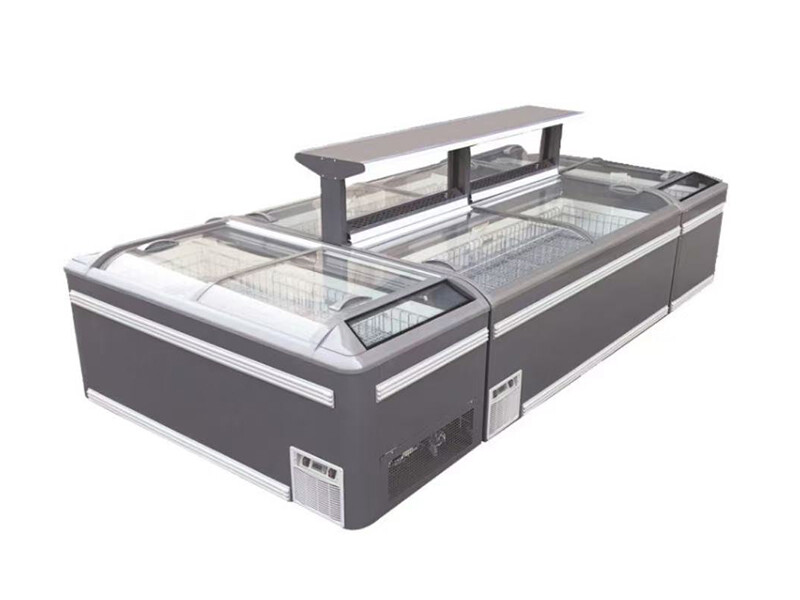
 Insert up and down sliding glass door combination island cabinetThe integral foam insulation layer provides rapid cooling and excellent refrigeration and heat preservation. A constant temperature defrost design ensures food quality. The modular design allows for modular assembly and a flexible combination for enhanced display effects. The plug-and-play design makes it easy to use.
 Insert up and down sliding glass door combination island cabinetThe integral foam insulation layer provides rapid cooling and excellent refrigeration and heat preservation. A constant temperature defrost design ensures food quality. The modular design allows for modular assembly and a flexible combination for enhanced display effects. The plug-and-play design makes it easy to use.
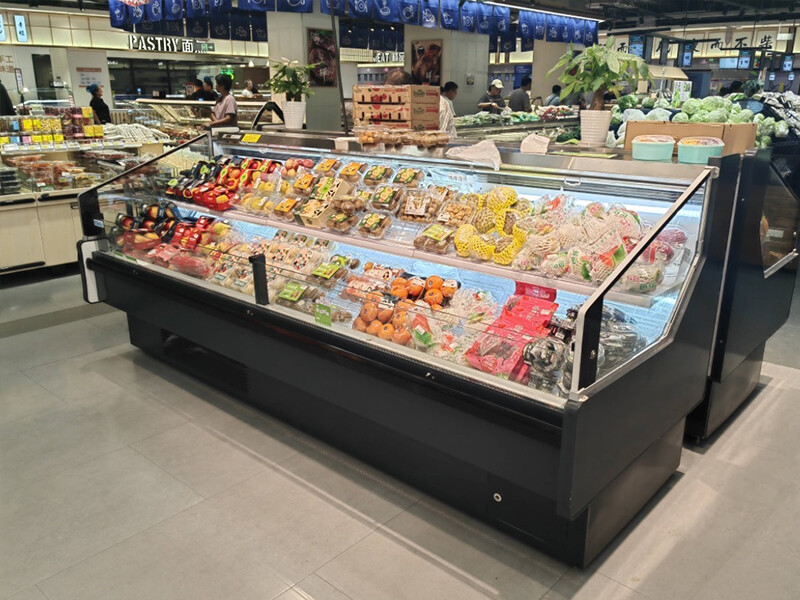
 Supermarket fruit refrigeratorThe large opening and panoramic glass display allow customers to see what they want at a glance, creating a great display experience. Soft lighting enhances the freshness of fruit and maximizes the food display experience. The large storage space facilitates the display of merchandise.