Why Stainless Steel Grade Matters in Hygienic Meat Display Cases (304 vs 316 Comparison)
When selecting hygienic fresh meat cabinets for retail displays, the choice of stainless steel grade directly impacts food safety compliance, equipment longevity, and operational costs. As a manufacturer with 10+ years of cold chain expertise, Xinbingxue Cold Chain reveals how 304 vs 316 stainless steel affects performance in temperature-controlled fresh meat cabinets.
The Critical Role of Stainless Steel in Meat Display Hygiene
Food-grade stainless steel is mandatory for meat display cases due to:
- Non-porous surfaces preventing bacterial colonization
- Chloride resistance against cleaning chemicals
- Structural integrity in high-humidity environments
Our factory tests show 316 stainless steel reduces biofilm formation by 37% compared to 304 in high-salt environments typical of butcher shops.
304 vs 316 Stainless Steel: Technical Comparison
Factory Direct Savings: Cost-Benefit Analysis
As a manufacturer owning the entire production chain from steel procurement to assembly, we deliver:
Integration With Advanced Cooling Technology
Our Commercial vertical glass door refrigerated display cabinet combines premium stainless steel construction with:
- Cold air diversion technology eliminating temperature dead zones
- Electrically heated glass preventing condensation
- 50% energy savings versus open cabinet designs
Industry-Specific Recommendations
FAQ: Stainless Steel Selection for Meat Cabinets
Q1: Is 316 stainless steel worth the extra cost for inland locations?
A: For standard operations, 304 suffices. However, 316 becomes cost-effective if using aggressive sanitizers or displaying cured meats with high salt content.
Q2: How does stainless steel grade affect food safety compliance?
A: 316's superior corrosion resistance maintains surface integrity longer, critical for passing microbial swab tests in HACCP audits.
Q3: Can I upgrade existing cabinets to higher-grade stainless?
A: Structural components cannot be retrofitted economically. We recommend specifying 316 for new purchases in corrosive environments.
Request Your Customized Solution
With ISO 9001-certified manufacturing and in-house metallurgy experts, Xinbingxue delivers tailored hygienic fresh meat cabinets combining optimal stainless steel grades with precision cooling technology. Contact our engineering team today for:
- Site-specific material recommendations
- Factory-direct pricing comparisons
- Energy efficiency calculations
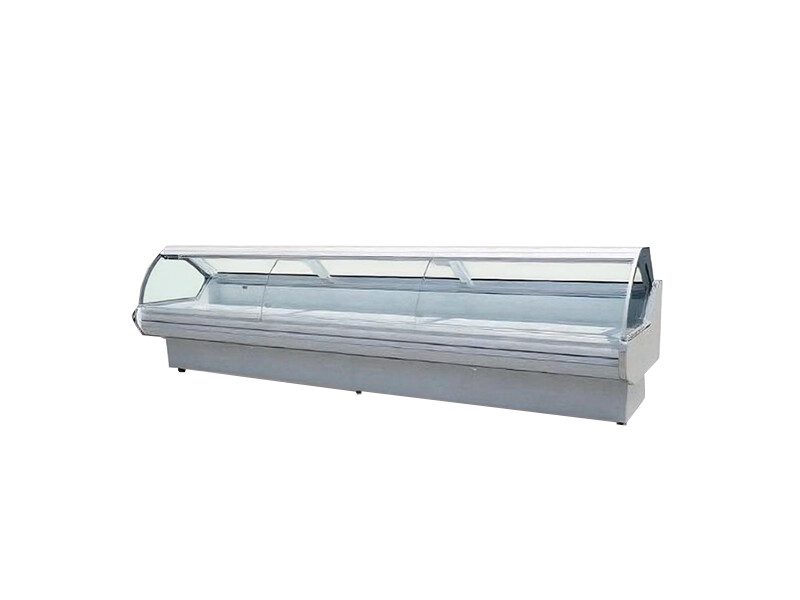
 Curved glass door cooked food display cabinetThe large opening and oversized curved glass display allow customers to easily find what they are looking for. Soft lighting from the top further enhances the food display. A microcomputer controller allows for versatile control and adjustment. A sliding glass panel at the rear maximizes ease of loading and restocking, making it convenient for daily use.
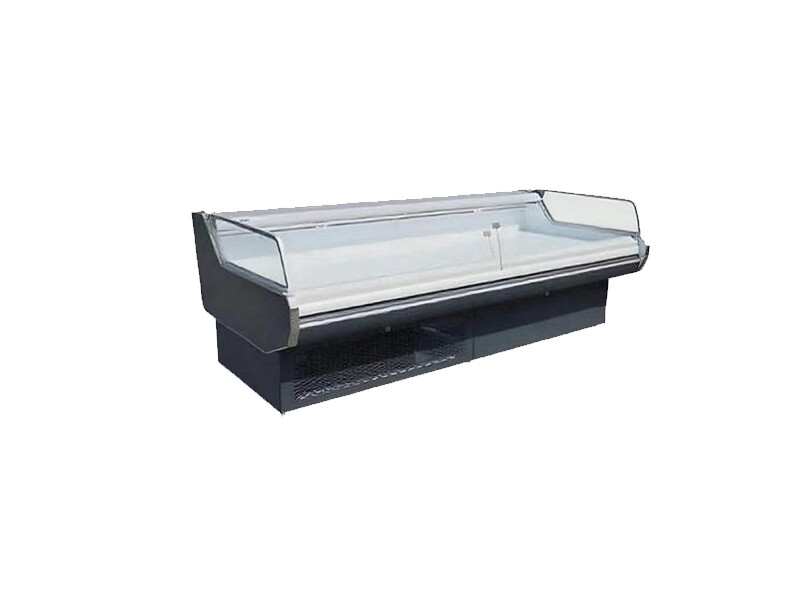
 Curved fresh meat display cabinetThe large opening, with three sides of insulating glass, allows customers to clearly see the food on display. Soft overhead lighting optimizes food display. The oversized opening facilitates easy loading and restocking, increases storage space, and enhances daily convenience. The night-deceleration curtains protect against insects and mosquitoes, saving energy and electricity.
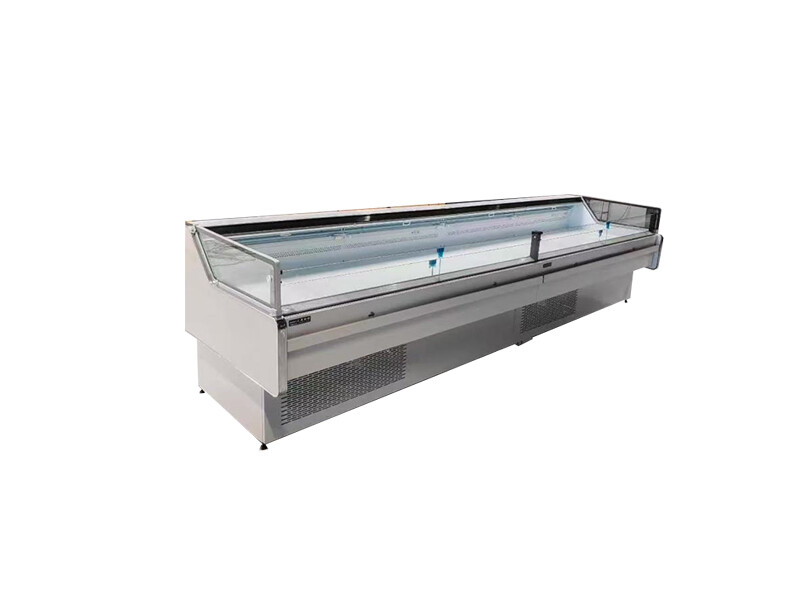
 Right angle fresh meat display cabinetThe large opening, with three sides of insulating glass, allows customers to clearly see the food on display. Soft overhead lighting optimizes food display. The oversized opening facilitates easy loading and restocking, increases storage space, and enhances daily convenience. The night-deceleration curtains protect against insects and mosquitoes, saving energy and electricity.