NEW
Choosing a reliable commercial freezer display manufacturer starts with one practical question: can this supplier help you protect food quality, control operating costs, and reduce procurement risk over the long term? For procurement teams and quality or safety managers, reliability is not just about whether a unit cools properly on day one. It depends on temperature stability, manufacturing consistency, compliance awareness, equipment durability, delivery capability, and after-sales responsiveness. A dependable manufacturer gives buyers confidence that the equipment will perform consistently in busy retail environments, not just in a showroom or product brochure.
What reliability really means in commercial freezer display sourcing
When buyers search for a reliable commercial freezer display manufacturer, they are usually trying to avoid expensive problems later: unstable temperatures, product spoilage, frequent maintenance, delayed deliveries, inconsistent product quality, or weak technical support. In real purchasing decisions, reliability means a manufacturer can consistently deliver freezer display equipment that meets performance requirements, passes quality checks, and supports daily retail operations without creating hidden costs.
For supermarkets, convenience stores, and fresh food retailers, freezer display equipment must do two jobs at the same time. It must preserve frozen food safely, and it must support product visibility and merchandising. That is why a trustworthy manufacturer needs strength in both refrigeration engineering and retail display design.
Can the manufacturer maintain precise and stable temperature control?
For quality control and food safety teams, this is often the first screening factor. A commercial freezer display manufacturer is more reliable when it can demonstrate stable temperature performance across different store conditions, load levels, and usage patterns. Temperature precision matters because even small fluctuations can affect frozen food quality, shelf life, and compliance confidence.
Buyers should ask practical questions such as:
- How consistent is cabinet temperature during peak operating hours?
- How does the system perform during frequent door openings or customer access?
- What defrost strategy is used, and does it affect product temperature?
- Can the manufacturer provide test data or performance documentation?
Reliable manufacturers usually invest in R&D and system validation rather than relying only on standard component claims. In the retail cold chain industry, strong engineering capability often shows up in better temperature control accuracy, improved energy efficiency, and more dependable long-term operation.
For example, some island freezer solutions are designed with features that directly support frozen food protection and retail usability. A product such as Insert up and down sliding glass door combination island cabinet reflects the kind of design details buyers should pay attention to: an integral foam insulation layer for rapid cooling and strong heat preservation, along with a constant temperature defrost design intended to help maintain food quality.
How important are manufacturing capacity and process control?
A manufacturer can only be considered reliable if it can produce at scale without losing consistency. This matters especially for procurement personnel managing multi-store rollouts, seasonal demand, or standardized equipment purchasing across regions. A supplier may offer a good sample unit, but the real test is whether it can maintain the same quality across larger orders.
Key indicators include:
- Factory size and production organization
- In-house manufacturing capability versus excessive outsourcing
- Standardized quality inspection processes
- Traceability of materials and key components
- Ability to meet delivery schedules reliably
Manufacturers with stronger intelligent manufacturing systems are often better positioned to control dimensional consistency, refrigeration assembly quality, insulation performance, and final product testing. For buyers, this translates into fewer installation issues, lower rejection rates, and more predictable project timelines.
In a large retail cold chain project, delayed or inconsistent equipment supply can affect store opening schedules, merchandising plans, and inventory setup. That is why manufacturing discipline is not just a factory issue; it is a direct business risk issue.
What signs show the equipment will be durable in real retail use?
Durability is one of the clearest differences between a low-cost supplier and a truly reliable commercial freezer display manufacturer. In retail settings, freezer display units face constant operational pressure: long running hours, repeated customer interaction, regular cleaning, loading and unloading, and changing store temperatures.
Procurement and quality teams should assess whether the equipment is built for this reality. Useful evaluation points include:
- Cabinet structure strength and corrosion resistance
- Insulation quality and long-term thermal retention
- Door and glass system durability
- Defrost system reliability
- Ease of cleaning and maintenance access
Durability also affects total cost of ownership. A cheaper unit that needs frequent repairs, loses cooling efficiency, or shows visible wear quickly may cost more over its service life than a better-built model. Reliable manufacturers understand that buyers are not only purchasing equipment, but also operating life and service stability.
Do design features support both operations and merchandising?
For retail buyers, freezer display equipment is not just storage. It also affects product presentation, customer convenience, and space utilization. This is where manufacturers with real retail-industry experience stand out. They design for both refrigeration performance and selling effectiveness.
Features such as modular assembly, flexible cabinet combinations, and plug-and-play installation can improve project efficiency and store adaptability. In practical terms, this means stores can optimize layout changes, display more effectively, and reduce installation complexity. These design advantages are especially valuable for chains with multiple store formats or evolving merchandising plans.
A modular island freezer concept can be particularly useful when stores want stronger visual presentation without sacrificing frozen product protection. The second reason a product like the Insert up and down sliding glass door combination island cabinet can be relevant in procurement evaluation is that its modular design allows flexible combinations for enhanced display effects, while the plug-and-play approach can simplify deployment.
How should buyers evaluate quality assurance and compliance readiness?
For quality control personnel and safety managers, a reliable manufacturer should be able to support risk prevention, not just product supply. That includes material quality control, inspection procedures, and a clear understanding of the food retail environment. Even if specific compliance requirements vary by market, the supplier should show disciplined quality assurance practices and the ability to provide relevant documentation when needed.
Important questions include:
- What incoming material inspections are performed?
- How are finished units tested before shipment?
- Are there documented quality management procedures?
- Can the supplier support product verification for different market needs?
- How are defects, claims, and corrective actions handled?
Reliable manufacturers usually communicate clearly about quality processes. They do not avoid technical questions, and they can explain how design, production, and inspection work together to reduce risk.
Why after-sales support often determines real supplier reliability
Many buyers only fully discover a supplier’s reliability after installation. That is why after-sales capability should be part of the initial evaluation, not an afterthought. Even well-designed freezer display equipment may require technical guidance, spare parts support, troubleshooting, or maintenance coordination over time.
A dependable manufacturer should be able to answer:
- How quickly can service requests be handled?
- Are spare parts readily available?
- Is remote technical support available?
- Can the supplier assist with installation guidance and operational training?
- How are warranty issues managed in practice?
For procurement teams, good after-sales support reduces downtime risk. For quality and safety managers, it supports stable operating conditions and faster resolution when equipment performance needs to be checked.
What is the best way to compare commercial freezer display manufacturers?
Instead of comparing suppliers mainly on unit price, buyers should use a practical reliability framework. A useful evaluation model includes five areas:
- Performance: temperature stability, cooling speed, defrost control, energy efficiency
- Manufacturing: factory capability, process consistency, production scale, delivery reliability
- Quality assurance: inspection systems, documentation, defect control, traceability
- Product usability: durability, maintenance access, display effectiveness, installation flexibility
- Support: technical communication, response speed, spare parts, after-sales service
This approach helps buyers move from a price-based decision to a risk-based and value-based decision. It also creates a more objective internal discussion between procurement, operations, and quality teams.
Final thought: reliability is proven by consistency, not claims
A reliable commercial freezer display manufacturer is one that consistently delivers safe, durable, and operationally efficient equipment backed by real manufacturing strength and responsive support. For buyers in the retail cold chain sector, the most important signals are not marketing promises, but evidence: stable temperature control, durable construction, scalable production, disciplined quality management, and practical after-sales service.
When procurement personnel and quality managers evaluate manufacturers through this lens, they are more likely to choose partners that reduce long-term risk and improve store performance. In other words, the best manufacturer is not simply the one with the lowest quotation, but the one most capable of protecting product quality, operational continuity, and long-term value.
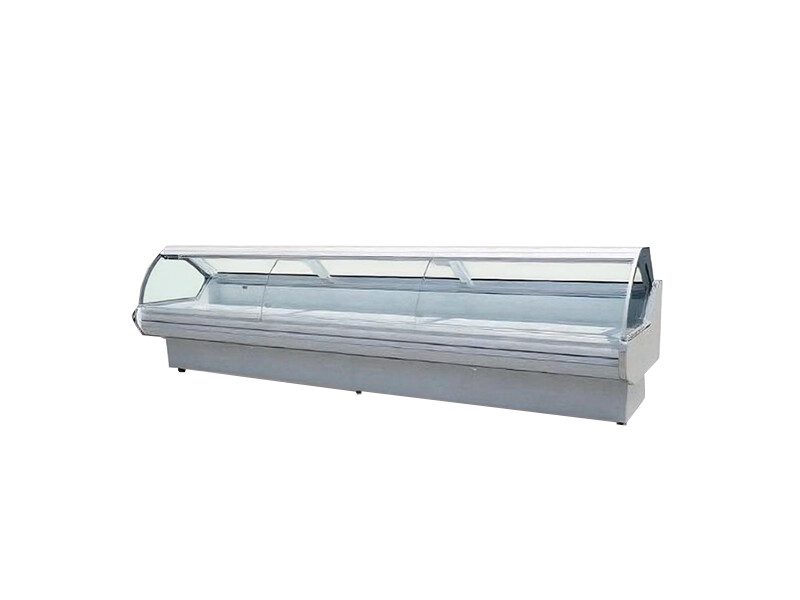
 Curved glass door cooked food display cabinetThe large opening and oversized curved glass display allow customers to easily find what they are looking for. Soft lighting from the top further enhances the food display. A microcomputer controller allows for versatile control and adjustment. A sliding glass panel at the rear maximizes ease of loading and restocking, making it convenient for daily use.
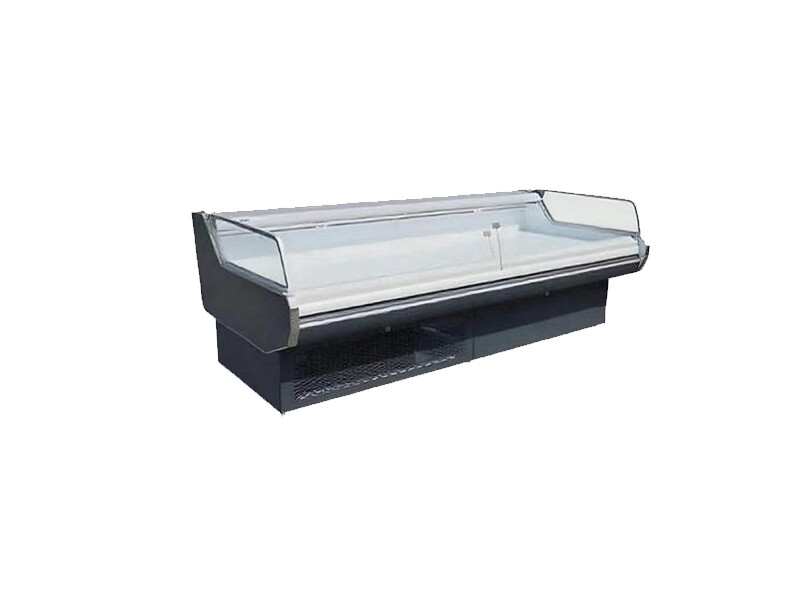
 Curved fresh meat display cabinetThe large opening, with three sides of insulating glass, allows customers to clearly see the food on display. Soft overhead lighting optimizes food display. The oversized opening facilitates easy loading and restocking, increases storage space, and enhances daily convenience. The night-deceleration curtains protect against insects and mosquitoes, saving energy and electricity.
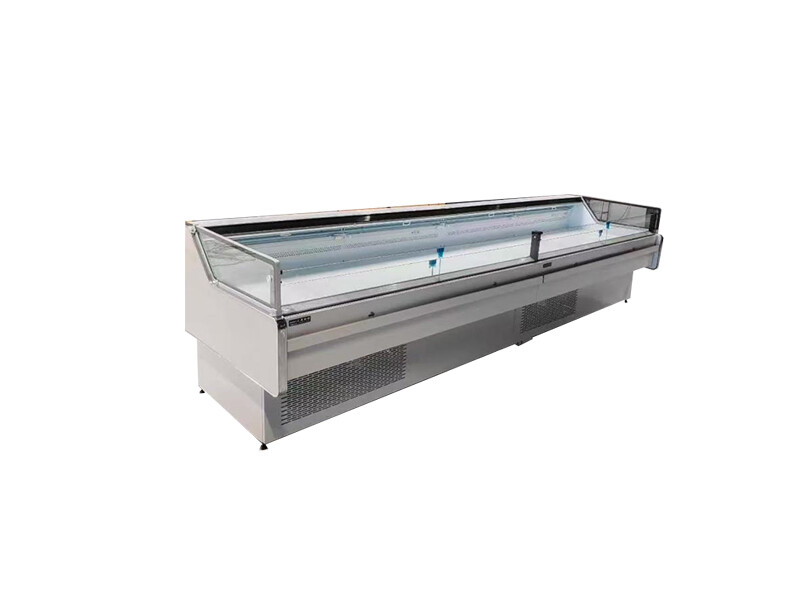
 Right angle fresh meat display cabinetThe large opening, with three sides of insulating glass, allows customers to clearly see the food on display. Soft overhead lighting optimizes food display. The oversized opening facilitates easy loading and restocking, increases storage space, and enhances daily convenience. The night-deceleration curtains protect against insects and mosquitoes, saving energy and electricity.