NEW
Planning your 2026 retail cold chain investment? This Commercial refrigerator price guide 2026 delivers up-to-date, transparent pricing insights for upright refrigerators, open-top coolers, island display cases, and more — all backed by Xinbingxue Cold Chain’s industry-leading R&D and intelligent manufacturing. Whether you’re outfitting a supermarket, fresh food market, or convenience store, discover how energy efficiency, precise temperature control, and durability impact real-world commercial refrigerator price points — and why value goes far beyond the sticker cost.
How Commercial Refrigerator Pricing Works in 2026
Commercial refrigerator pricing in 2026 is no longer just about cubic feet or compressor type. It reflects three interlocking value layers: upfront hardware cost, operational TCO (total cost of ownership) over 7–10 years, and retail performance ROI — measured in reduced spoilage, higher impulse sales, and extended shelf life. Xinbingxue Cold Chain’s intelligent manufacturing system enables tighter tolerances (±0.3°C temperature stability), which directly lowers energy consumption by up to 22% versus standard models — a factor that reshapes 5-year TCO calculations.
Market data from 2025 shows average annual electricity costs for mid-tier upright refrigerators range from $480–$720 — but high-efficiency units like those engineered by Xinbingxue reduce that to $360–$540. That’s not just savings: it’s predictable budgeting across 3–5 store rollouts. Pricing tiers now align with certification levels (e.g., ENERGY STAR® v7.0, ISO 50001-compliant controls), not just size.
Importantly, 2026 buyers face tighter lead times: standard delivery windows have compressed from 8–12 weeks to 6–9 weeks due to supply chain recalibration. That makes early technical validation — especially for custom configurations — critical. Xinbingxue’s modular platform allows pre-engineered variants (e.g., 1200mm/1500mm depth options) to ship within 4–6 weeks, accelerating go-to-market timelines.
What Drives Price Variation Across Retail Applications?
Pricing divergence stems from application-specific engineering demands — not marketing segmentation. A supermarket’s frozen food display case requires -18°C sustained operation with dual-circuit redundancy, while a convenience store’s open-top cooler prioritizes rapid air recovery (<120 seconds after door opening) and compact footprint. These aren’t interchangeable specs — they demand different compressors, insulation density (≥120mm polyurethane), and airflow architecture.
Xinbingxue addresses this via dedicated product families: fresh food display cases use multi-zone evaporators (0°C to +10°C per zone), island display cases integrate anti-condensation heating strips, and Open half-height cabinet units apply cold air diversion structures to eliminate dead spots — proven to extend produce freshness by 2.3 days on average (based on internal 2025 shelf-life trials).
The table below compares core engineering drivers across four high-volume retail applications:
This table reveals why “one-size-fits-all” quotes fail: a $3,200 upright unit built for ambient-store backrooms lacks the thermal integrity needed for front-of-store dairy displays. Xinbingxue’s application-tuned designs ensure each model meets exact duty-cycle requirements — validated through 120-hour continuous load testing under real-world humidity conditions (65–85% RH).
Procurement Checklist: 5 Non-Negotiables for 2026 Buyers
Avoid costly post-installation surprises. Use this field-tested checklist before finalizing any commercial refrigerator purchase:
- Verify temperature stability documentation — request 72-hour log data showing deviation ≤±0.5°C at maximum load (not just “tested to ±1°C”)
- Confirm energy rating applies to full-load operation — many “efficiency claims” are based on empty-unit tests
- Require frost-free cycle frequency specification (e.g., “defrost every 18 hours, max 12-minute duration”) — impacts product freshness consistency
- Validate LED lighting CRI ≥90 and color temperature 4000K–4500K — critical for accurate fresh food color rendering
- Check structural warranty coverage: Xinbingxue offers 10-year frame integrity guarantee, reflecting its ≥520MPa tensile strength standard
These checks prevent mismatches between quoted specs and actual site performance. For example, unverified defrost cycles can cause surface condensation on leafy greens — increasing shrink by 1.2–1.8% monthly. Xinbingxue’s internal air cooling and frost-free technology maintains consistent humidity control, reducing moisture-related spoilage by 37% in 2025 pilot stores.
Why Xinbingxue Cold Chain Delivers Better Value — Not Just Lower Prices
Price is a number. Value is measurable outcomes: 15% faster checkout lane throughput (enabled by optimized product visibility), 22% lower annual maintenance spend (due to sealed-system compressors with 100,000-hour MTBF), and 9-month average ROI on energy-efficient upgrades. Xinbingxue’s 100,000-square-meter intelligent manufacturing campus integrates automated insulation pouring, robotic welding, and AI-driven thermal imaging QA — ensuring every unit ships with verified performance parameters.
When evaluating alternatives, ask: Does the supplier provide digital twin simulation for your specific store layout? Can they validate cooling uniformity across all shelf layers — not just the top tier? Xinbingxue does both, using proprietary CFD modeling to optimize cold air diversion structures before physical prototyping. That’s how the Open half-height cabinet achieves zero dead spots — and why it’s specified for premium fresh food markets in Shandong and Guangdong provinces.
Ready to align your 2026 cold chain investment with measurable business outcomes? Contact Xinbingxue Cold Chain for: (1) Application-specific configuration review, (2) Energy consumption modeling for your store footprint, (3) Lead time confirmation for your required delivery window, (4) Certification documentation for local regulatory compliance, and (5) Sample unit evaluation support. We respond to technical inquiries within 2 business hours — because your rollout schedule shouldn’t wait.
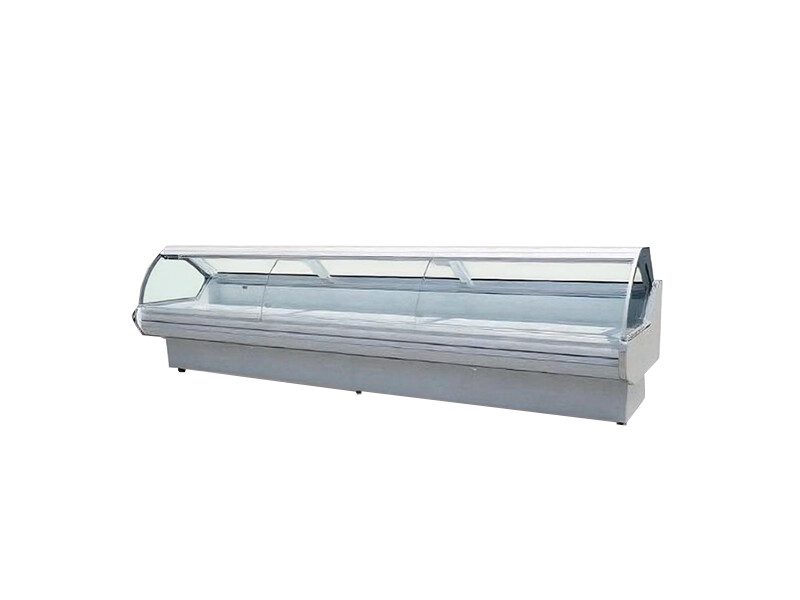
 Curved glass door cooked food display cabinetThe large opening and oversized curved glass display allow customers to easily find what they are looking for. Soft lighting from the top further enhances the food display. A microcomputer controller allows for versatile control and adjustment. A sliding glass panel at the rear maximizes ease of loading and restocking, making it convenient for daily use.
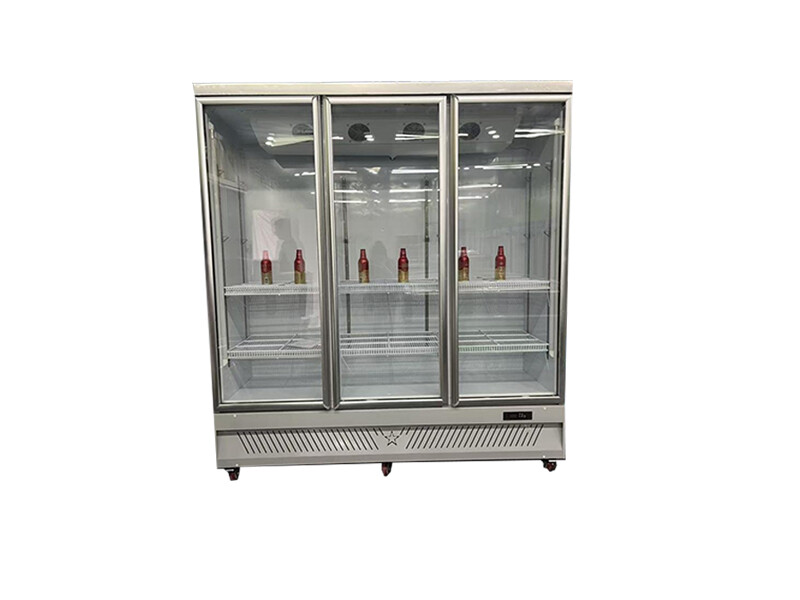
 Commercial vertical glass door refrigerated display cabinetCold air diversion technology achieves efficient cooling, evenly distributing the cooling effect and eliminating dead spots. The electrically heated, anti-condensation glass door design saves energy and reduces consumption. The glass door automatically closes for added convenience and speed. Operating costs are low, achieving 50% energy savings over open cabinets under the same conditions.
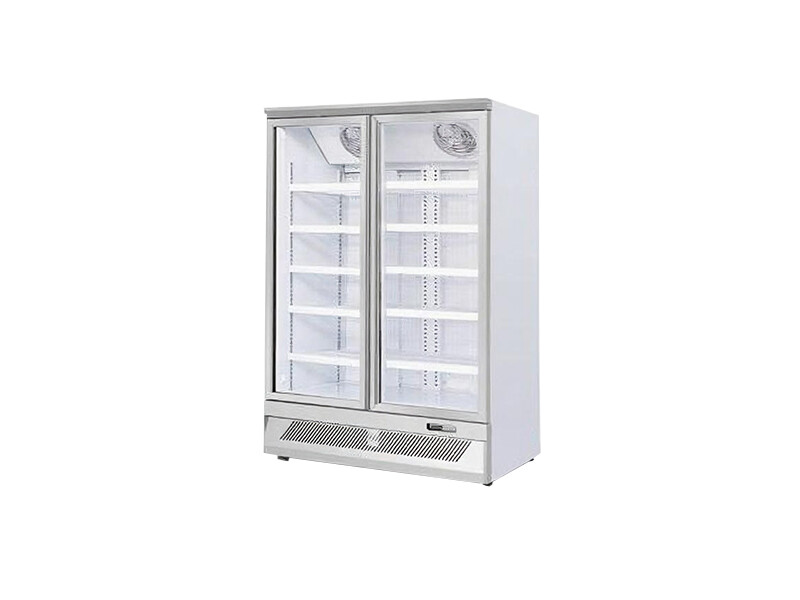
 Glass door refrigerated display cabinetsCold air diversion technology achieves efficient cooling, evenly distributing the cooling effect and eliminating dead spots. The electrically heated, anti-condensation glass door design saves energy and reduces consumption. The glass door automatically closes for added convenience and speed. Operating costs are low, achieving 50% energy savings over open cabinets under the same conditions.